10 things nobody tells you about your first ice bath
The complete guide to ice baths: how cold, how long, how often, and how not to lose your cool.

So, you’ve decided to take an ice bath.
Congratulations. You’ve voluntarily signed up to sit in freezing cold water when there’s a perfectly good sofa somewhere nearby.
Your friends think you’re brave. Your toes think you’ve lost your mind.
And the person who convinced you to try it? They’re standing there smiling suspiciously.
But here’s the thing.
Your first ice bath doesn’t need to be an extreme sport. You don’t need to become a human popsicle, break any records or prove anything to anyone.
You just need to know what you’re doing.
From finding the right temperature to figuring out how long to stay in, here are ten things worth knowing before you take the dip.
1. How cold should an ice bath be? Cold enough. Not Arctic expedition cold.
Let’s start with the million-dollar question.
What temperature should an ice bath be?
You might imagine an ice bath needs to be practically freezing to count.
It doesn’t.
Cold-water immersion research often uses temperatures around 10–15°C (50–59°F), although studies use a range of temperatures and there isn’t one scientifically established best temperature for everyone.
If you’re new to ice baths, it’s sensible to start with warmer cold water, around 15–20°C (59–68°F), and see how your body responds.
You can work towards colder temperatures gradually as you become more comfortable.
The cold hard fact: Colder isn’t automatically better. You’re taking an ice bath, not auditioning for a role as a frozen fish finger.
2. Your first 30 seconds might be the most dramatic
You step in.
Your feet object.
Your legs file a complaint.
And suddenly your breathing sounds like you’ve just sprinted up six flights of stairs.
Welcome to the cold shock response.
When cold water hits your skin, your body can react with an involuntary gasp, rapid breathing, a faster heart rate and a rise in blood pressure.
It’s a normal physiological response, but it can also be dangerous, particularly if you enter too quickly or have an underlying health condition.
What helps?
Enter slowly, keep your head above water and allow your breathing to settle naturally. Never hold your breath or hyperventilate before getting in.
The cold hard fact: Your body might act like there’s an emergency. Your job isn’t to fight it. It’s to stay safe and avoid turning the experience into one.
3. How long should you stay in an ice bath? This isn’t a competition.
There’s always someone who wants to stay in longer.
Three minutes? Easy.
Five minutes? Amateur hour.
Ten minutes? Somebody please get this person a hobby.
But how long should you stay in an ice bath?
There isn’t one perfect duration for everyone.
Many exercise-recovery studies use immersions lasting several minutes, but that doesn’t mean beginners should copy research protocols.
For your first session, a very brief dip may be plenty. You can gradually build familiarity rather than aiming for a particular number on the clock.
Temperature, experience, health and how you’re feeling all matter.
Longer exposure increases the risk of excessive cooling, and you should leave immediately if you experience dizziness, confusion, chest discomfort, unusual weakness or feel unwell.
The cold hard fact: The goal is to leave feeling good, not to become the longest-serving member of the ice bath.

4. How often should you take an ice bath? Your body doesn’t need a daily appointment with winter.
Every day?
Three times a week?
Only after leg day?
How often should you take an ice bath?
The answer depends on why you’re doing it.
Some people enjoy cold-water immersion as part of a regular wellbeing routine. Others use it occasionally after demanding exercise.
But research hasn’t established an ideal weekly frequency for general health.
And if you’re strength training to build muscle, frequent ice baths immediately after lifting may interfere with some training adaptations.
For beginners, occasional sessions with time to assess how you respond are a sensible starting point.
The cold hard fact: Consistency might help you get comfortable with cold water. But there’s no magic number of weekly dips that guarantees better health.
5. How cold is too cold? When your body says enough, listen.
Here’s a useful rule.
If your body is sending distress signals, don’t negotiate with it.
Very cold water can increase the risk of cold shock, excessive cooling and cardiovascular strain.
And the colder the water, the less room there may be for error.
Warning signs include persistent uncontrollable shivering, numbness, confusion, dizziness, chest pain or unusual difficulty breathing.
Get out immediately if you feel unwell. If symptoms are severe or don’t resolve, seek urgent medical assistance.
People with heart conditions, arrhythmias, blood pressure problems, circulation disorders or other relevant medical concerns should seek medical advice before trying an ice bath.
The cold hard fact: An ice bath is supposed to challenge your comfort zone, not your emergency contact list.
6. Do ice baths help muscle recovery? Your legs may vote yes.
If you’ve ever done a brutal workout and then tried to sit down the next morning, you’ll understand the appeal.
Ice baths have been studied for their effects on post-exercise muscle soreness.
Research suggests cold-water immersion can reduce delayed-onset muscle soreness after strenuous exercise, although results vary.
But there’s an important distinction.
Less soreness doesn’t necessarily mean faster muscle repair.
And using ice baths immediately after every strength-training session may reduce some of the muscle growth you’d otherwise achieve.
So whether an ice bath makes sense after exercise depends on your goals.
The cold hard fact: Ice baths may help sore muscles complain a little less. Just don’t confuse less complaining with instant recovery.
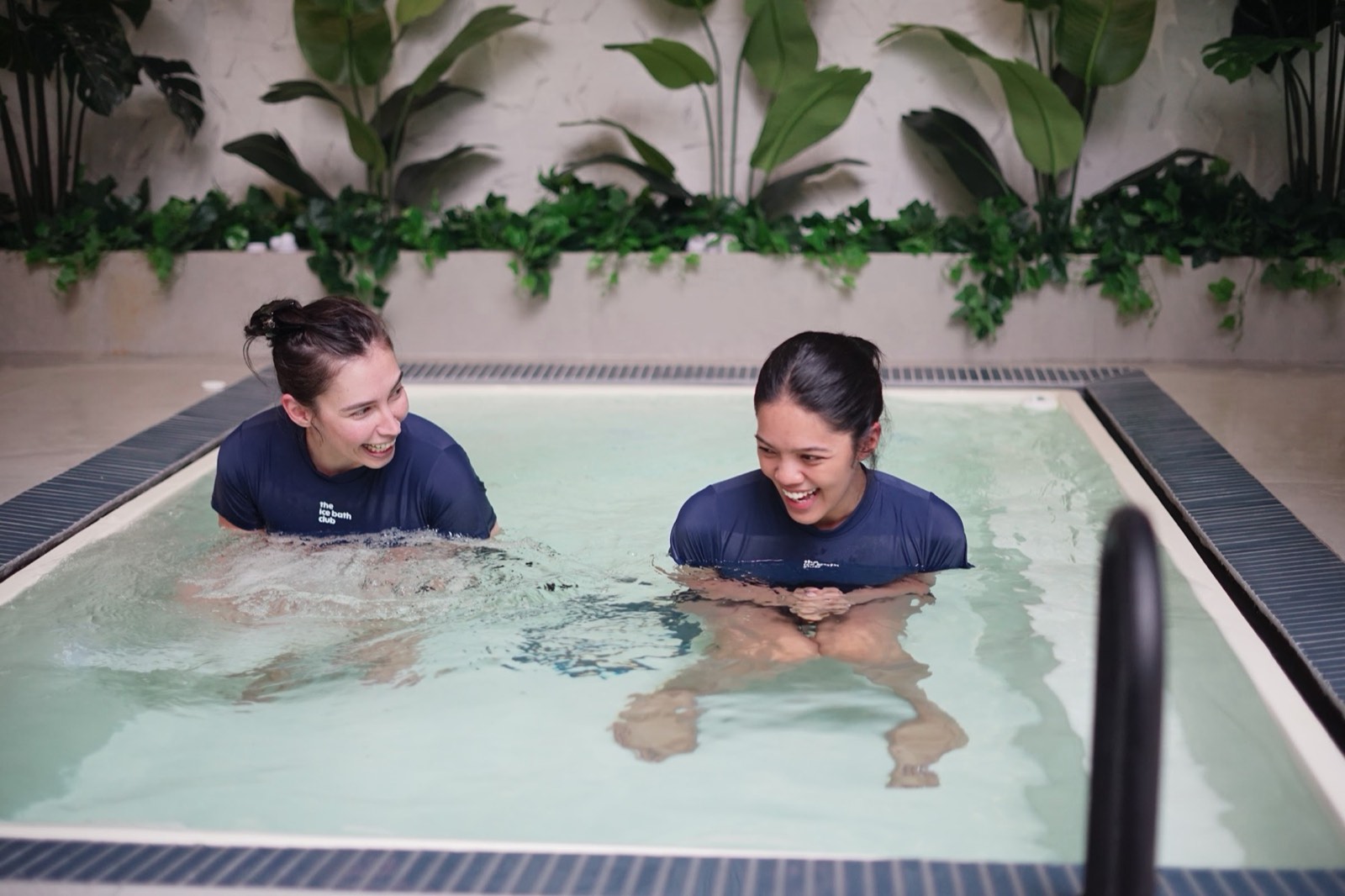
7. You don’t need to fill your bathtub with half the supermarket’s ice supply.
How much ice do you need for an ice bath?
Good question.
The answer depends on the amount of water, its starting temperature, the surrounding temperature and how much cooling you want.
There’s no universal number of ice bags that works for every bathtub.
A thermometer is far more useful than guessing.
If you’re making an ice bath at home, measure the water temperature, add ice gradually and stir the water to distribute the cooling.
And remember, an ice bath doesn’t have to be filled with floating ice cubes to be cold.
The cold hard fact: More ice doesn’t earn you extra points. It just gives you a bigger shopping bill.
8. Getting out can feel almost as interesting as getting in.
You’ve survived your first dip.
Victory.
But before you celebrate by sprinting towards the nearest sauna, remember that your body is still adjusting.
Cold exposure can leave your hands and feet feeling numb or your coordination temporarily reduced.
And your body temperature may continue to fall for a period after leaving the water.
Get out carefully, dry yourself, put on warm clothing and allow yourself to warm up gradually.
Avoid immediately jumping into extreme heat if you’re dizzy, weak or otherwise unwell.
The cold hard fact: The ice bath ends when you get out. The sensible decisions shouldn’t.

9. You don’t have to love every second of it.
Let’s be realistic.
Some people step into an ice bath and look completely unbothered.
Others make a noise usually reserved for stepping on Lego.
Both are normal.
Cold water feels uncomfortable because your body is responding to a sudden change in temperature.
With gradual exposure, some people become more accustomed to that sensation and experience a reduced cold shock response.
But being able to tolerate colder water doesn’t necessarily mean you’re getting greater health benefits.
And you never need to force yourself to remain in water that’s causing distress.
The cold hard fact: Getting comfortable with discomfort is one thing. Ignoring your body’s warning signs is another.
10. The best ice bath is the one you actually want to do again.
Here’s the biggest secret.
Your first ice bath isn’t about proving how tough you are.
It’s about having a positive, safe introduction to something new.
You might love the alertness afterwards.
You might enjoy the challenge.
You might discover that sitting in cold water with friends is surprisingly entertaining.
Or you might decide you’d prefer to spend a little more time in the sauna.
That’s fine too.
There’s no single perfect ice bath routine, and you don’t need to copy someone else’s temperature, duration or frequency.
The cold hard fact: The best ice bath isn’t the coldest or longest. It’s one that suits you and leaves you wanting to come back.
Ice bath fAQs: the quick dip
What is the best ice bath temperature for beginners?
Start with warmer cold water, such as 15–20°C, rather than immediately aiming for very low temperatures. There’s no universal ideal temperature.
How long should a beginner stay in an ice bath?
Start with a brief, comfortable exposure rather than a fixed endurance target. Duration should depend on the water temperature, your response and any relevant health considerations.
Should you take an ice bath every day?
You don’t need to. There isn’t strong evidence establishing daily ice baths as the best routine for general health.
Are ice baths good after a workout?
They may reduce muscle soreness after strenuous exercise. However, frequent immediate post-workout immersion can be counterproductive for some strength-training goals.
Can you take an ice bath if you have a heart condition?
Sudden cold exposure can increase cardiovascular strain. Seek medical advice before trying an ice bath if you have a heart condition or other relevant medical concerns.

Ready to take the dip?
You’ve got the facts.
You know the temperatures.
You know there’s no prize for staying in the longest.
Now all that’s left is to find out what the fuss is about.
At The Ice Bath Club, you can experience an ice bath in a purpose-built setting, enjoy the sauna and discover why so many people keep coming back for more.
And unlike your bathtub at home, you won’t have to spend the afternoon buying bags of ice.
Ready to get cold feet? In a good way.
Find your nearest clubOr know someone who needs a little encouragement to break the ice?
Explore gift cards